Removing an epoxy coating from a concrete floor is not simply a matter of choosing the most aggressive diamond tool. The right approach depends on how thick the coating is, how firmly it is bonded to the concrete, and what condition the floor needs to be in after removal. Two common options are PCD tools and metal bond diamond tools. Although both are used with concrete floor grinding equipment, they work differently and are designed for different stages of surface preparation. Understanding these differences helps contractors remove epoxy more efficiently while avoiding unnecessary damage to the concrete underneath.
PCD tools, such as SASE PCD removal tool and Scanmaskin PCD tool, are generally the preferred starting point for removing thick, stubborn epoxy coatings. Unlike conventional diamond segments that primarily grind by abrasion, PCD cutters have hard cutting edges designed to scrape or shear bonded materials from the surface. This makes them particularly useful when dealing with thick epoxy layers, strongly adhered coatings, and certain adhesive residues. The orientation and number of PCD segments affect how aggressively the tool works, so the right design should be selected according to the coating and machine. However, PCD tools are not suitable for every removal situation. On thin coatings or exposed concrete, an overly aggressive PCD tool may cause gouging or leave an uneven surface if not used carefully.
Metal bond diamond tools are generally better suited to grinding the concrete itself and refining the surface after the main coating layer has been removed. They use diamond abrasives held in a metal matrix to grind concrete and remove remaining thin coating residues, surface irregularities, and unwanted material. Their performance depends on factors such as diamond grit, bond hardness, segment design, and concrete characteristics. For example, a suitable metal bond tool like HTC EZ change grinding shoe can help remove residual epoxy traces and prepare the exposed concrete for a subsequent grinding or polishing sequence. However, using conventional metal bond segments directly on a thick or sticky epoxy layer can cause the material to accumulate on the segments, reducing cutting efficiency and leading to glazing.
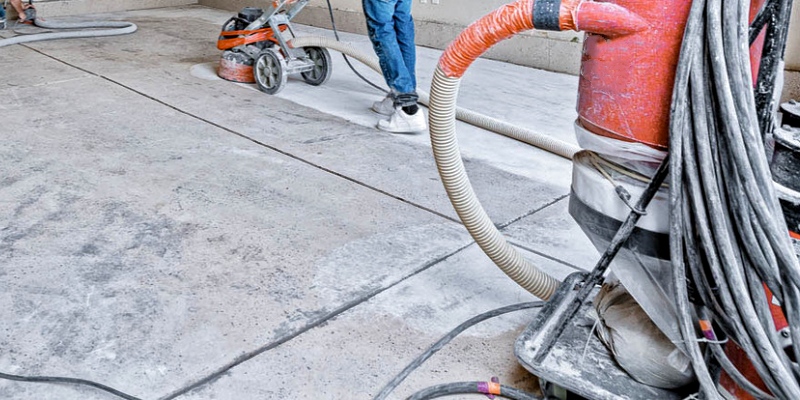
In many epoxy removal projects, the most effective solution is to use both tools in sequence rather than treating them as competing alternatives. PCD tooling can first remove the bulk of a thick coating, while metal bond diamond tools can then address remaining residues and grind the concrete to the required surface condition. The transition between these stages should be based on what remains on the floor, not simply on a predetermined number of passes. If substantial epoxy is still present, switching to metal bond tooling too early may lead to poor cutting performance. Conversely, continuing with aggressive PCD tooling after most of the coating has been removed can unnecessarily damage the concrete substrate.
The concrete condition and the intended next application also influence tool selection. If the floor will receive a new epoxy coating, the exposed concrete generally needs to be clean, sound, and prepared to the surface profile specified by the coating manufacturer. If the goal is polished concrete, additional grinding stages will be needed to refine the scratch pattern before polishing begins. Contractors should also check for oil, grease, moisture, and other contaminants, since mechanical removal alone may not eliminate contamination within the concrete. A small test area is useful for evaluating coating removal performance, checking the condition of the substrate, and confirming that the selected tooling is appropriate.
Ultimately, PCD and metal bond diamond tools serve different but complementary roles in epoxy removal. PCD tools are typically more effective for taking off thick, strongly bonded coatings, while metal bond tools are better suited to grinding exposed concrete and completing the surface preparation after removal. The best choice depends on coating thickness, adhesion, concrete condition, grinder compatibility, and the requirements of the next stage of work. By selecting the right tool for each stage, contractors can improve removal efficiency, reduce unnecessary tool wear, and leave the concrete in a more suitable condition for its next treatment.

 IPv6 Netzwerk unterstützt
 English
 français
 Deutsch
 русский
 italiano
 español
 português
 العربية
 日本語
 Polski
 中文